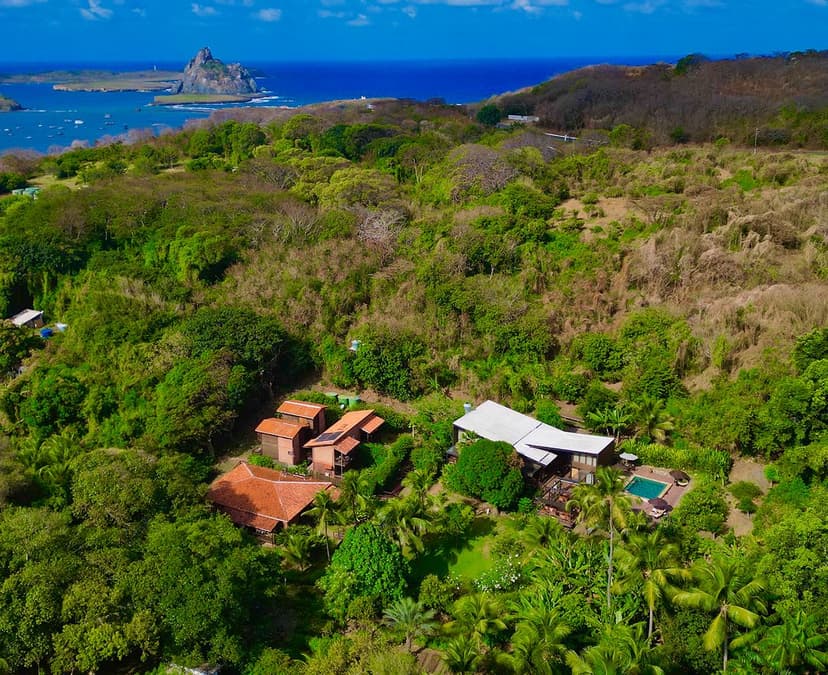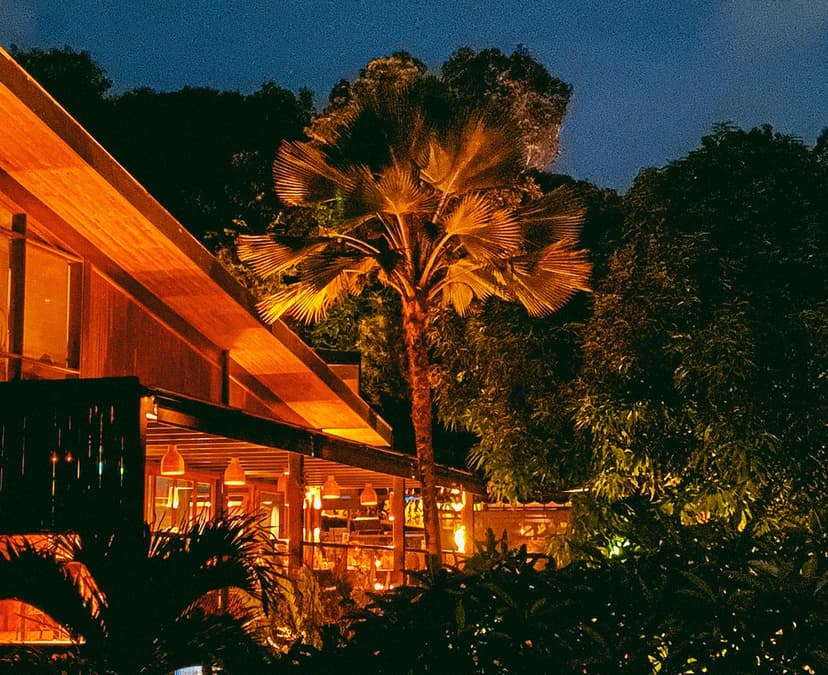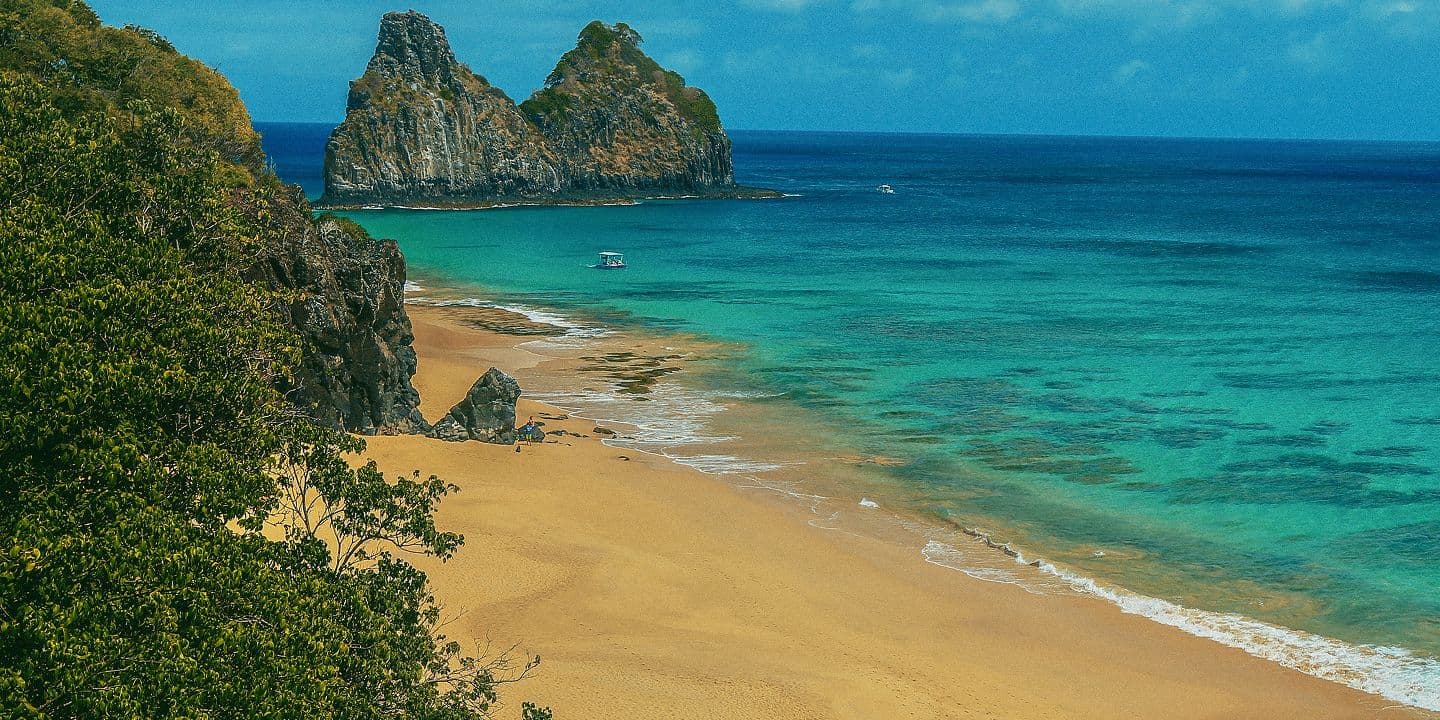
Fernando de Noronha has 21 beaches, 17 km² of land area, and two stretches of sea with opposite characteristics: the Mar de Dentro (Inner Sea), as the coast facing Brazil's Northeast is known — home to the main beaches with tourist access — has calm waters and high visibility for diving between May and October, and choppier seas with excellent conditions for surfing from December to March.
On the opposite side of the island lies the Mar de Fora (Outer Sea), facing the west coast of Africa, home to some of the island's wildest beaches: from May to October the sea there is rougher, while from December to March it becomes calmer, making it the better window for activities in the water. Knowing what's available each season shapes the kind of trip you take.
The main beaches and how to reach them
Mar de Dentro (Inner Sea)
- Baía do Sancho. Repeatedly voted one of the most beautiful beaches in the world. Surrounded by stunning viewpoints — most notably Mirante da Baía dos Porcos — access is via a vertical ladder through a rock cleft, with set times for descent and ascent. A National Park entrance ticket (ICMBio) is mandatory. Another way to reach Sancho is by an accredited boat tour.
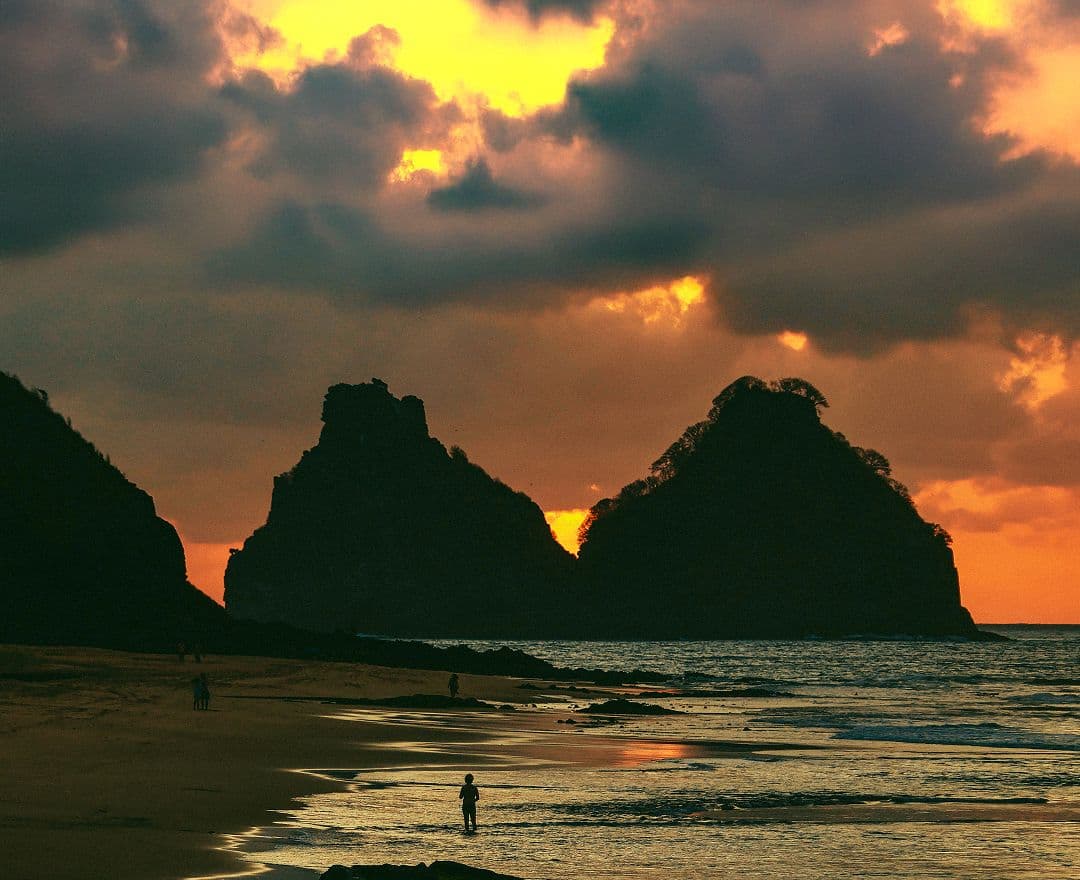
- Cacimba do Padre and Praia do Bode. Connected at low tide by a long stretch of sand, great for a walk with the iconic Morro Dois Irmãos in the background. Internationally known for the strength and quality of its waves during summer surf season, Cacimba is also an excellent spot for swimming and free diving in the calm-sea season on the Inner Sea. With beach service available, it's one of the best sunset spots, with beautiful viewpoints at both ends.
- Baía dos Porcos. Reached via Cacimba beach at low tide, this hidden little bay has natural pools connected to the sea, perfect for free diving and swimming. The viewpoint leading to the beach offers an unmissable view of the bay, the Inner Sea, and Morro Dois Irmãos.
- Praia do Boldró. A calm beach for relaxing on the sand, with natural pools forming at low tide; also a great alternative surf spot in summer. Free diving in the calm-sea season (winter) is another highlight of this beautiful beach, which has viewpoints with lovely views. An excellent sunset option.
- Praia da Conceição. The island's main tourist beach thanks to its proximity to the village and its variety of attractions and services. A well-rounded, well-attended beach, good for relaxing, with plenty of activities on the sand and in the water — surfing, beach tennis, stand-up paddling, footvolley, snorkeling, and walking or running at low tide. It also has two beach bars and sunshade rental service. An excellent sunset option.
- Praia do Cachorro and Praia do Meio. The two beaches closest to Vila dos Remédios, separated by a small stretch of rocks. Good both for relaxing and for beach and water activities (surfing, stand-up paddling, snorkeling). They have beach service and natural pools at low tide.
- Praia do Porto. One of the island's best, most reliable and safe snorkeling spots; also an option for scuba diving thanks to the rich underwater fauna and a few shipwrecks, plus calm seas most days of the year. Easy to access, with beach service, restaurants and bars nearby, and the departure point for boat tours. Other activities here include Hawaiian canoe, stand-up paddling, aquatic biking, and towed diving.
Mar de Fora (Outer Sea)
- Praia do Leão. Noronha's largest and wildest beach, and the main sea turtle nesting site — considered by many one of the island's most beautiful. In summer, it offers top-level free diving. A National Park entrance ticket (ICMBio) is mandatory.
- Baía do Sueste. The only Outer Sea beach with calm waters year-round. As the island's main natural marine nursery, swimming is currently prohibited by ICMBio, though visitors can walk the entire stretch of sand and easily spot juvenile marine species, such as sharks. A National Park entrance ticket is mandatory.
- Praia do Atalaia. A small beach with one of the island's main natural pools, a natural nursery with calm, clear waters. Accessible only at low tide and, depending on sea conditions, only with prior booking and a Park entrance ticket (ICMBio).
Sea: diving, snorkeling and boat trips
Noronha's waters have the highest underwater visibility in Brazil, between 30 and 50 meters under ideal conditions.
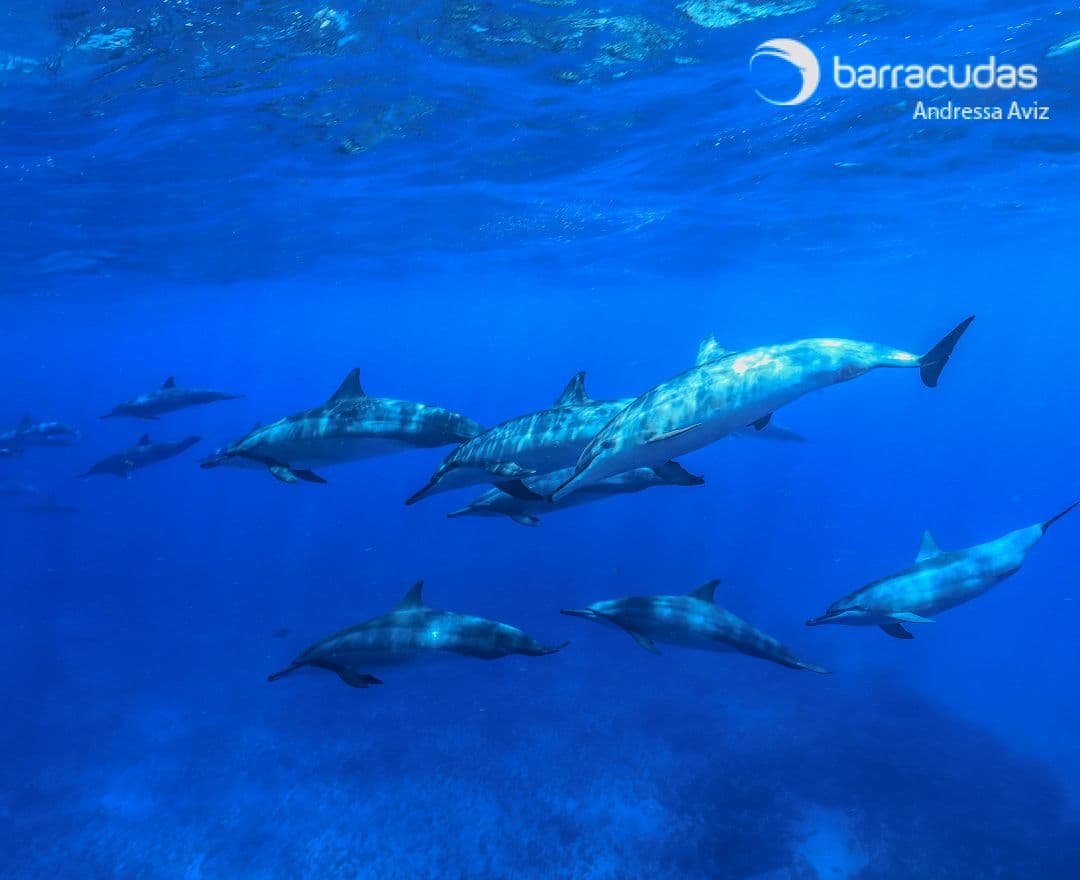
The rich marine fauna includes sea turtles, sharks (nurse, lemon and blacktip reef), rays, octopuses, squid, reef fish and spinner dolphins.
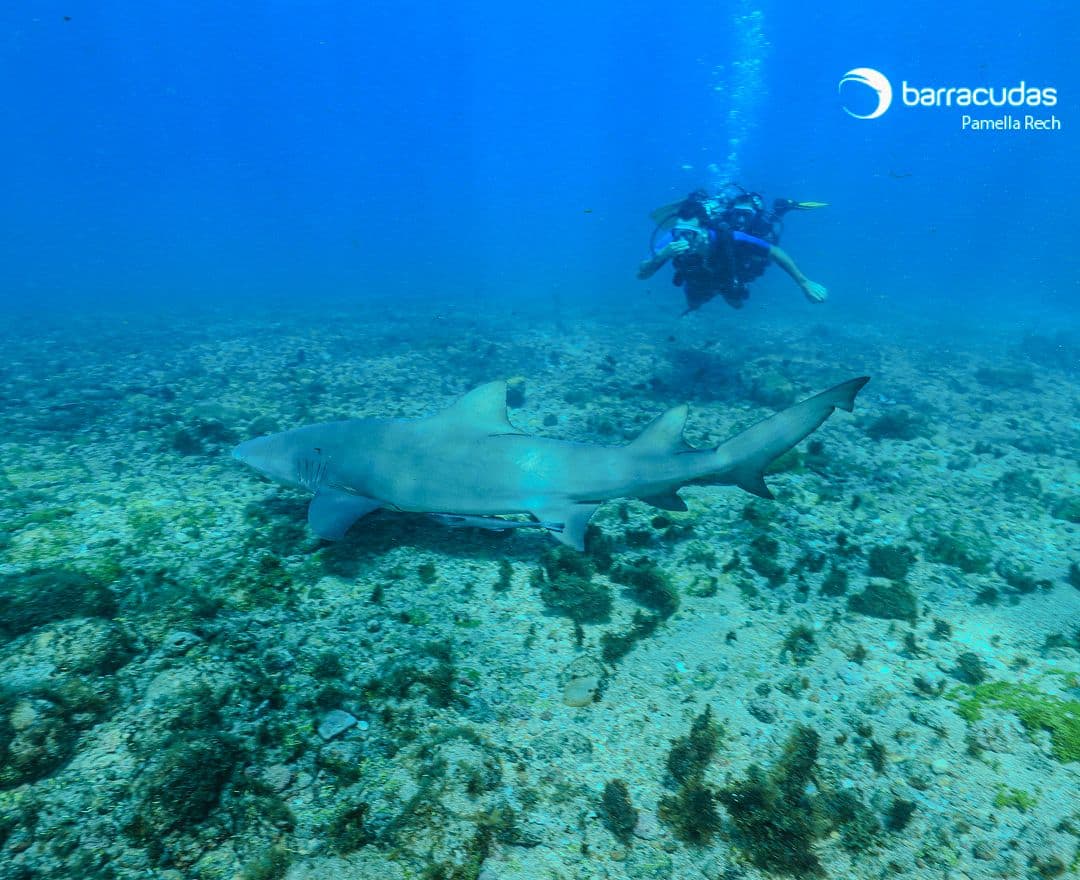
Scuba diving
Spots such as Caverna da Sapata, Pedras Secas, Buraco do Inferno, Cordilheiras, and the Ipiranga and Eleani Stathatos shipwrecks are reference points.
ICMBio-accredited operators offer intro dives, dives for certified divers, and certification courses.
Snorkeling
- Região do Porto (best in winter)
- Baía do Sancho (best in winter)
- Baía dos Porcos (winter)
- Leão (summer)
- Praia do Atalaia (low tide, prior booking mandatory)
Boat trips
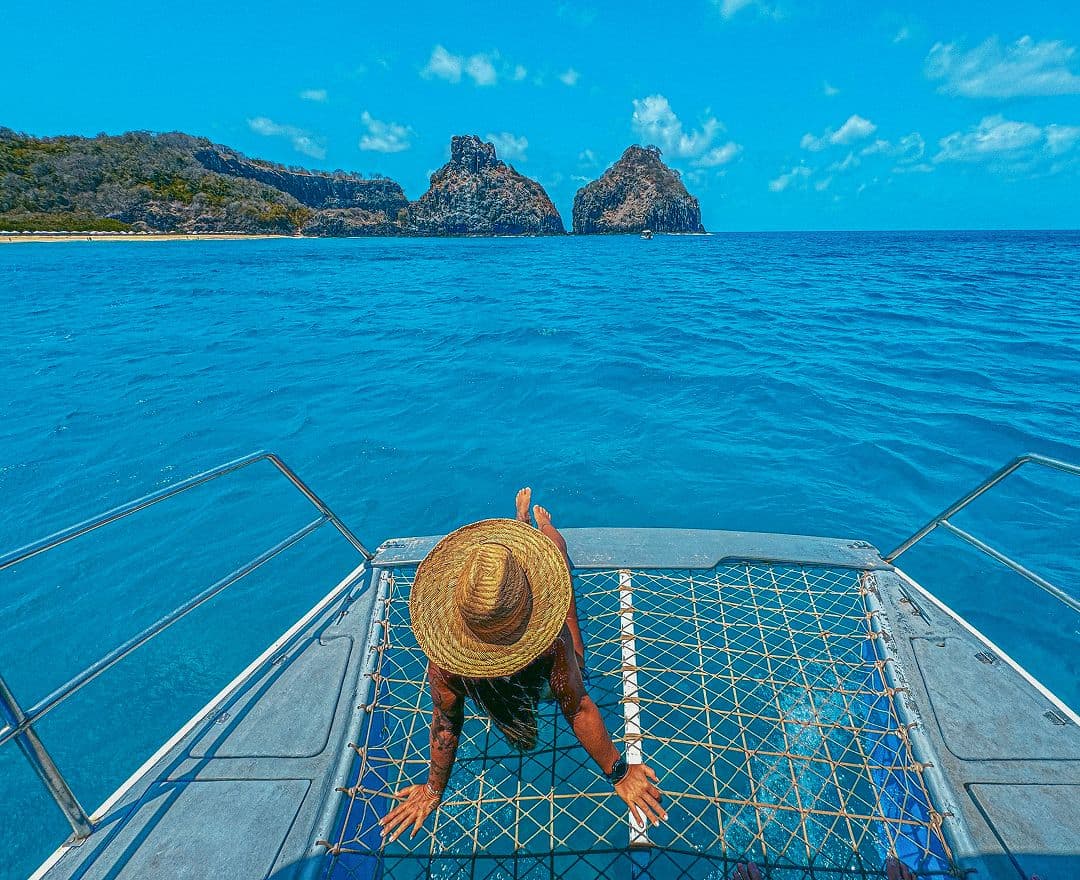
Depart from and return to the Porto de Santo Antônio pier. There are two main options: a tour with entry into the park area, and one without. Both last 3 to 4 hours, in morning or afternoon slots.
The tour with park access sails further, down to the island's southern tip, stopping on the way back at Baía do Sancho — inside the park area — with the option to swim or dive, though for limited time due to park rules.
The other tour follows the same route but only as far as Morro dos Irmãos, the limit of navigation outside the park, then returns for an open-ended stop at Praia da Conceição or the Porto area for diving and swimming.
There are various boat sizes and profiles for both routes, with different services included, in shared or private formats — plus options for custom routes and schedules.
On land: trails and viewpoints
Main trails
- Trilha do Atalaia, short or long version, passing viewpoints, hillsides and natural pools. Only at low tide, with access requiring prior booking, a Park/ICMBio entrance ticket, and a mandatory accredited guide.
- Trilha Costa Esmeralda. Runs along the Inner Sea's main beaches and viewpoints, passing natural pools from Praia do Cachorro to Baía dos Porcos. No booking or entrance ticket required, since it doesn't enter the park area. Only at low tide; a guide is recommended to navigate the transitions more safely.
- Trilha dos Golfinhos. Accessed via the Sancho entrance checkpoint, a walk through the forest to Mirante dos Golfinhos, with the option to continue to the Baía do Sancho viewpoints. Doable at any tide, no guide required, but a Park/ICMBio entrance ticket is necessary.
- Trilha do Capim-Açu. The island's longest and most demanding trail, crossing the forest and hills of Noronha's south with some of the island's most beautiful viewpoints, caves and natural pools on the Outer Sea hillside, ending at Praia do Leão with a swim in the sea. Requires an accredited guide.
- Trilha do Piquinho. A trek to the base of Morro do Pico, with viewpoint options overlooking the island and a beautiful sunset. A guide is recommended for extra safety and to explore all its beauty.
Some of the island's main viewpoints: Mirante da Baía dos Porcos, Mirante do Sancho, Mirante da Baía dos Golfinhos, Mirante do Fortinho do Boldró, Mirante do Forte do Sueste, Mirante da Ponta das Caracas, Mirante do Buraco da Raquel e Caieiras, and Mirante da Ponta da Sapata (Capim-Açu trail).
Wildlife: what you'll see in Noronha
Spinner dolphins enter Baía dos Golfinhos daily at dawn. Sea turtles are seen year-round at spots like Baía do Sueste and Praia do Sancho, with nesting occurring mainly between December and May.
Schools of fish, sharks, rays and octopuses complete the underwater scene. Seabirds such as the striking, acrobatic boobies and frigatebirds are also a spectacle of their own in several spots on the island, where you can get quite close to them.
Note: touching or feeding wildlife is prohibited and subject to fines from ICMBio.
Fees and permits
TPA (Environmental Preservation Tax). Charged per day of stay. Can be paid online before boarding.
Marine National Park entrance (PARNAMAR/ICMBio). Required for access to beaches, trails and viewpoints within the National Park area.
Specific bookings. Trails, dives and boat trips require advance reservations due to high demand and limited spots. Pousada do Vale's concierge arranges these bookings with the best supplier and equipment options on the island.
Frequently asked questions about activities in Fernando de Noronha
What's the best time of year to visit Noronha?
Noronha has incredible options for almost every kind of traveler, so the best time really depends on your travel profile.
Our concierge's job is precisely to connect you with the best Noronha has to offer, based on its natural features and tourist attractions.
How many days are enough to see Noronha?
For a complete itinerary, 5 to 7 days is recommended, or more depending on your expectations. 4-day stays cover the essentials.
Do I need a guide for every trail?
No. Check with our concierge for guidance on each trail.
Can I see dolphins without taking a boat trip?
Yes. Besides the Hawaiian canoe and aquatic bike tours, the Mirante dos Golfinhos and other lookout spots allow you to watch the dolphins.
That said, sightings are always subject to nature's variables.
Do children enjoy Noronha?
Yes — beyond the close contact with the island's privileged nature and its wildlife, aspects like safety and easy access to most attractions, especially the Inner Sea beaches, make the island an excellent destination for family and teen travel.
Note: some access points, like the vertical ladder at Baía do Sancho, may not be suitable for young children.